The long middle at puntWG
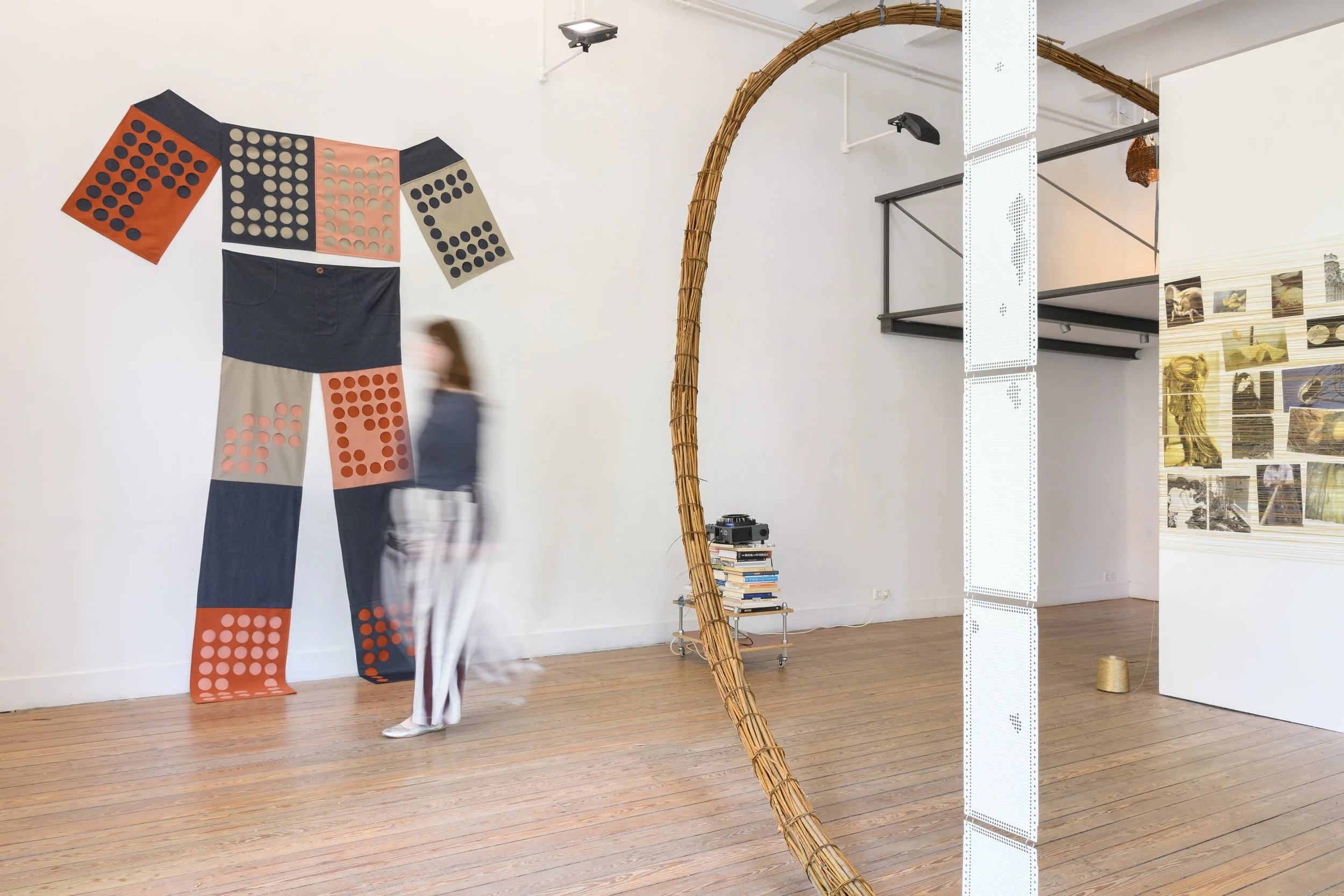
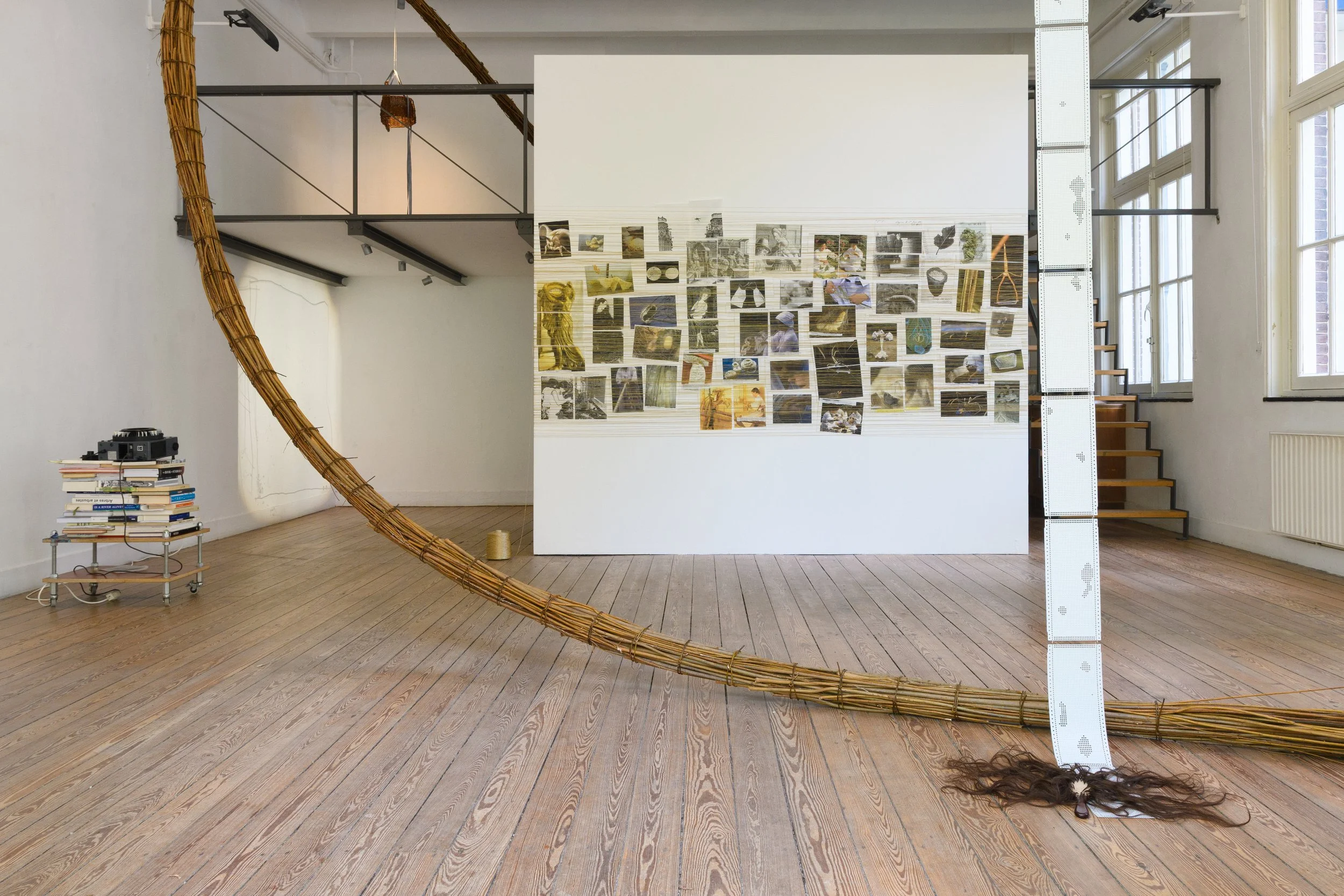
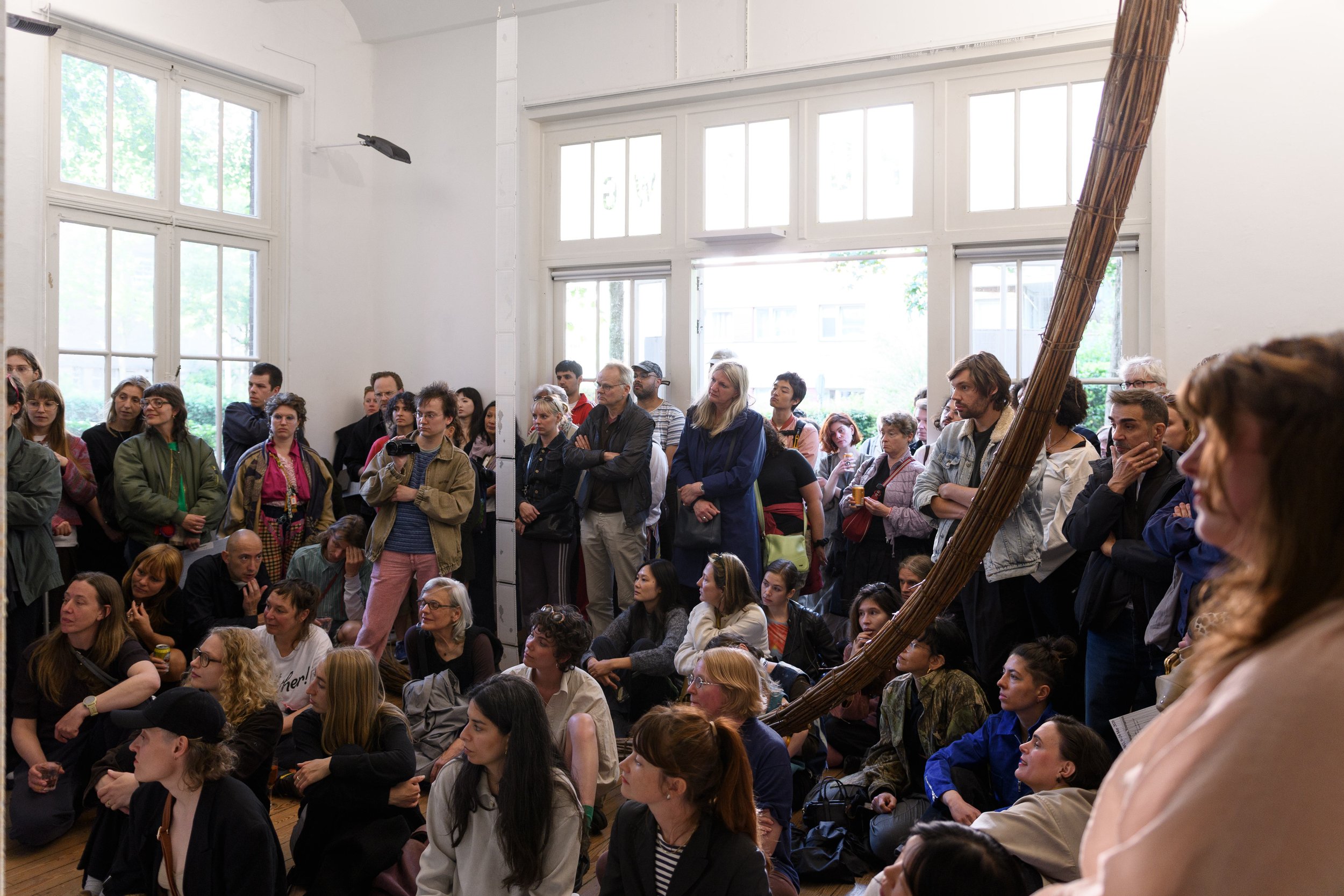
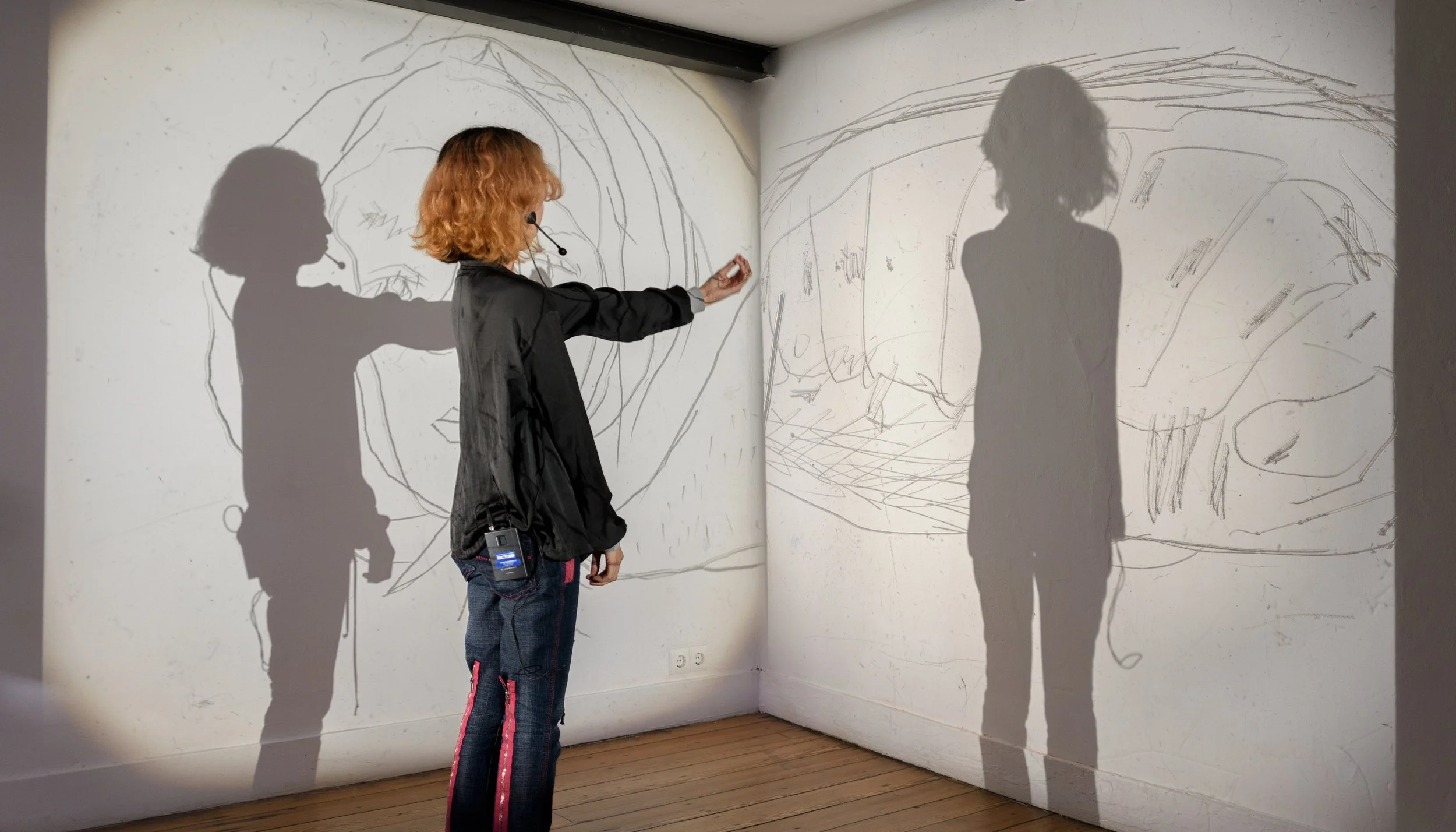
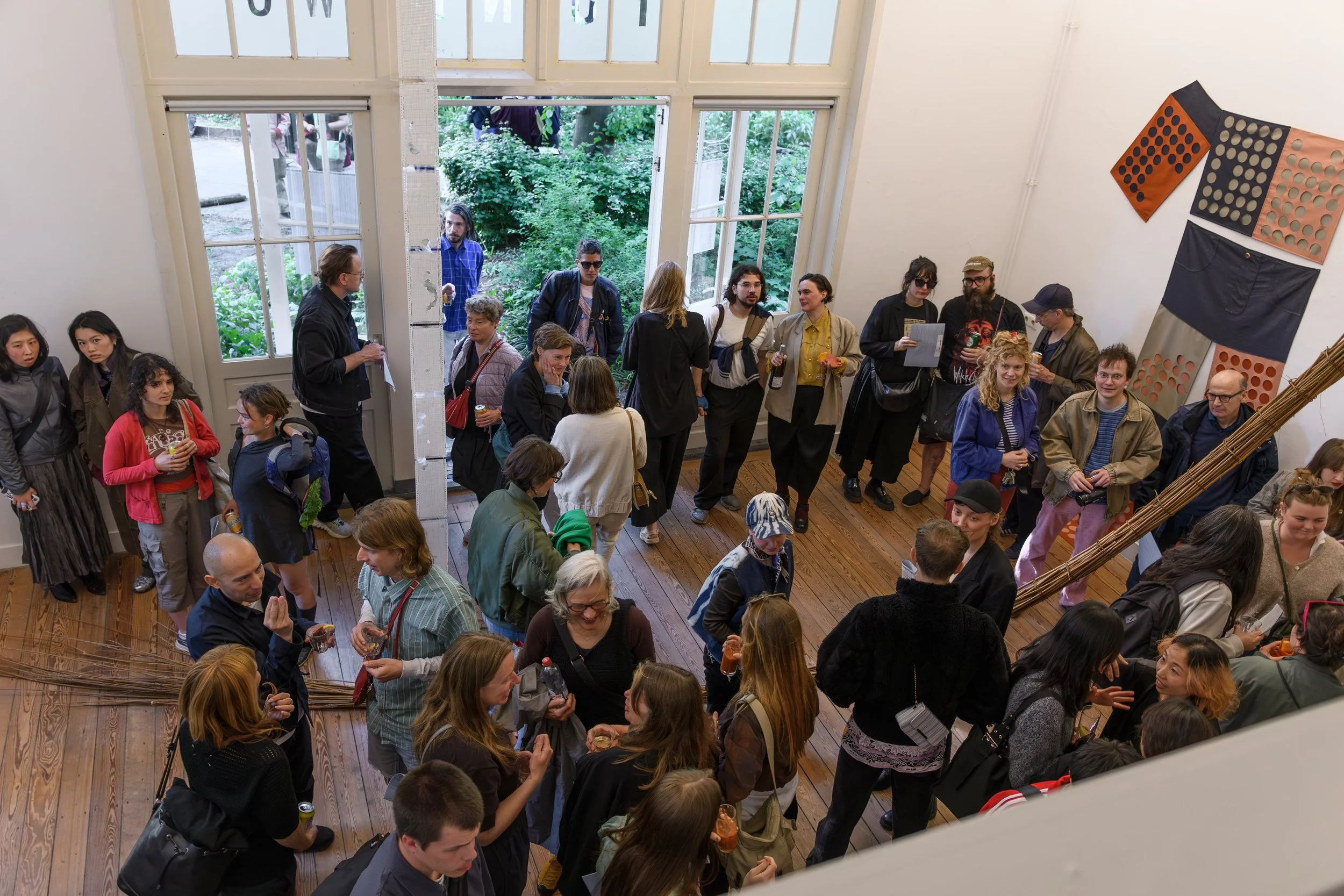
The long middle is a collaborative exhibition by Marie Ilse Bourlanges, Youngeun Sohn and Romy Day Winkel. Through sculpture, installation and performance works, the exhibition takes weaving as its underlying logic and as a way of thinking about embodiment and materiality.
The long middle explores bodily engagement with materials like silk, hair and willow bark, and the works share an interest in maintenance work: actions that must be performed continuously in order to keep things going. Weaving thread, shaping bark, and brushing hair are all durational gestures. Through them, materials and bodies are kept in use, shaped by prolonged contact with one another. This closeness to material can be tender, yet also awkward, tedious, or uncomfortable. The exhibition does not idealise this work, but stays with its ambivalence.
The exhibition title draws on multiple references, including Kate Briggs' book The Long Form, which reflects on the sustained effort of creative work while caring for a child. 'The long middle' also refers to the challenging middle phase of a project, after novelty has settled but completion remains open. A mode of labour that is ongoing and often invisible. By allowing such tensions to remain unresolved, The long middle resists sanitised narratives of bodily engagement with materials. Contact is neither purely nurturing nor purely degrading; it is a fact of working with and through bodies.
This ambivalence resonates with the history of puntWG, housed in the former Wilhelmina Gasthuis, where bodies were shaped by regimes of care, control, and hygiene. Working within this history, the exhibition refuses the clean separation between care and strain, maintenance and exposure, tending and being worn down.
Exhibition: The long middle, puntWG (Amsterdam)
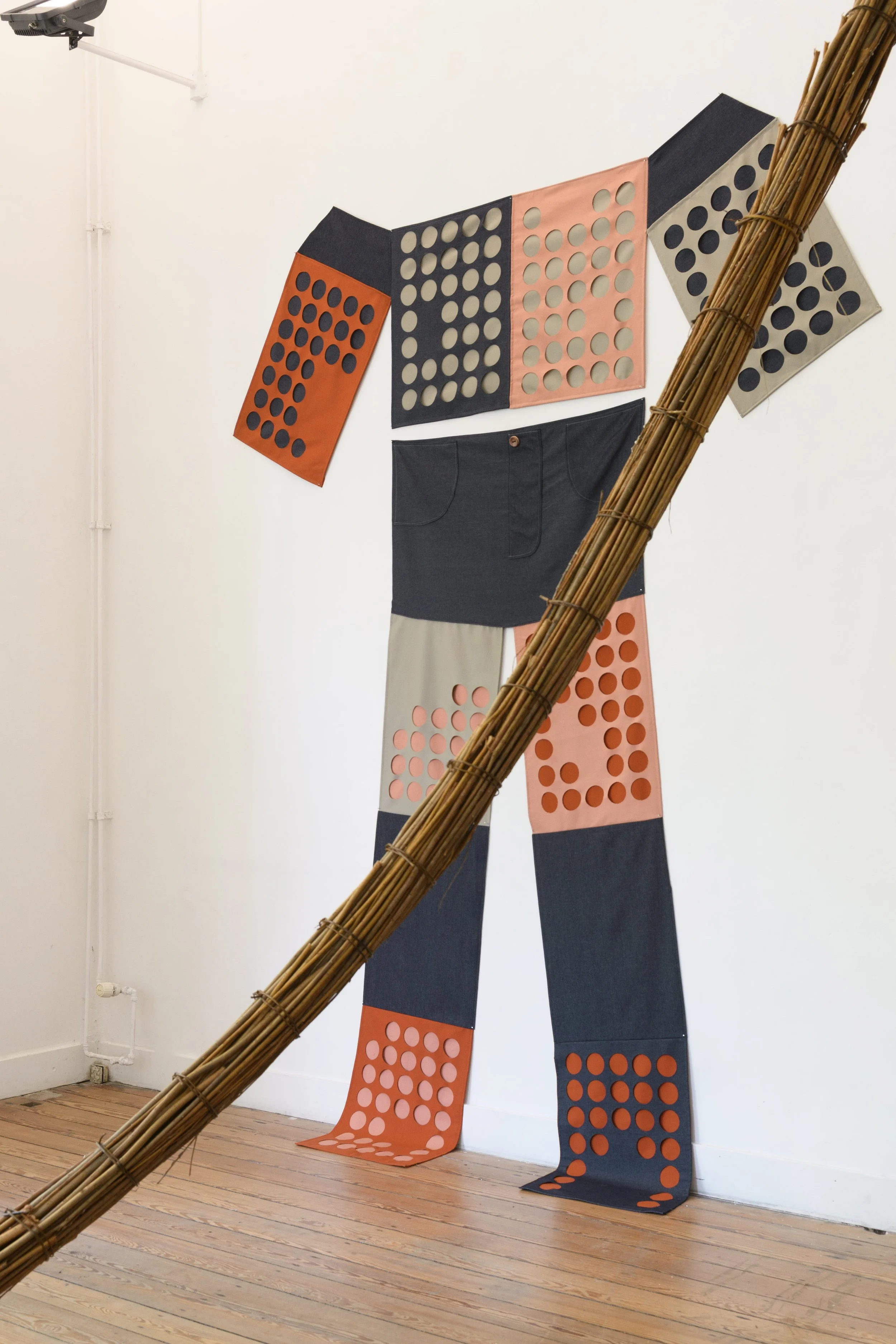
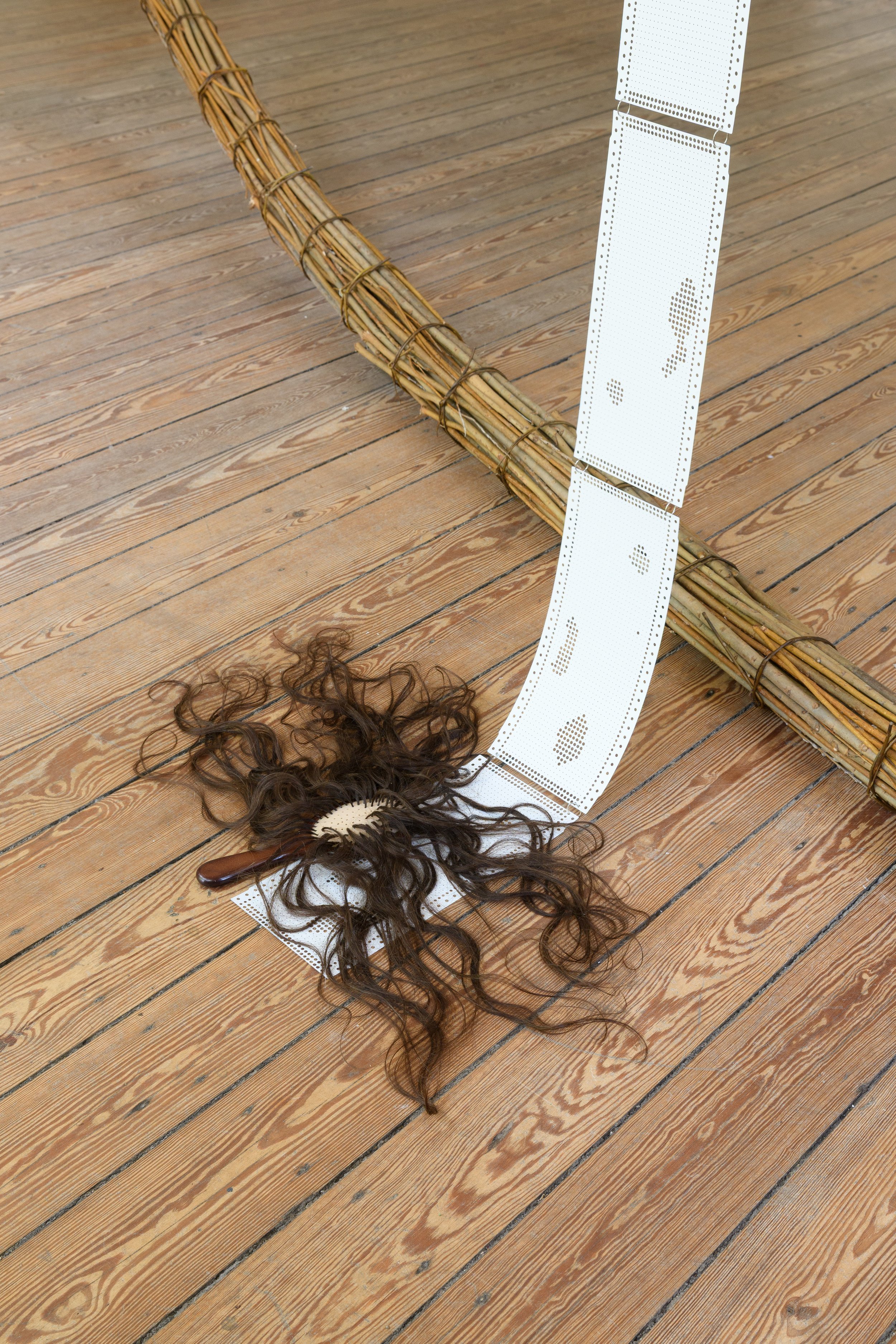
I made two new works for this exhibition. Both take a map of my own hair loss as its starting point. Since I was a teenager, I suffer from alopecia areata: an autoimmune condition in which the body attacks its own hair follicles, causing patches of unpredictable hair loss across the scalp. For this exhibition, I have translated this pattern into a map with its own decorative logic.
To map the alopecia pattern, I turned to punch cards: strips of perforated material developed for the Jacquard loom to automate the weaving of decorative textile patterns, and the direct ancestor of the computer. Across these works, the involuntary alopecia pattern enters that system, finds a common syntax with industrial weaving, and returns as ornament.
9 - 24 May 2026
Photos: Harm van den Berg / Studio Plancius